22 January 2026
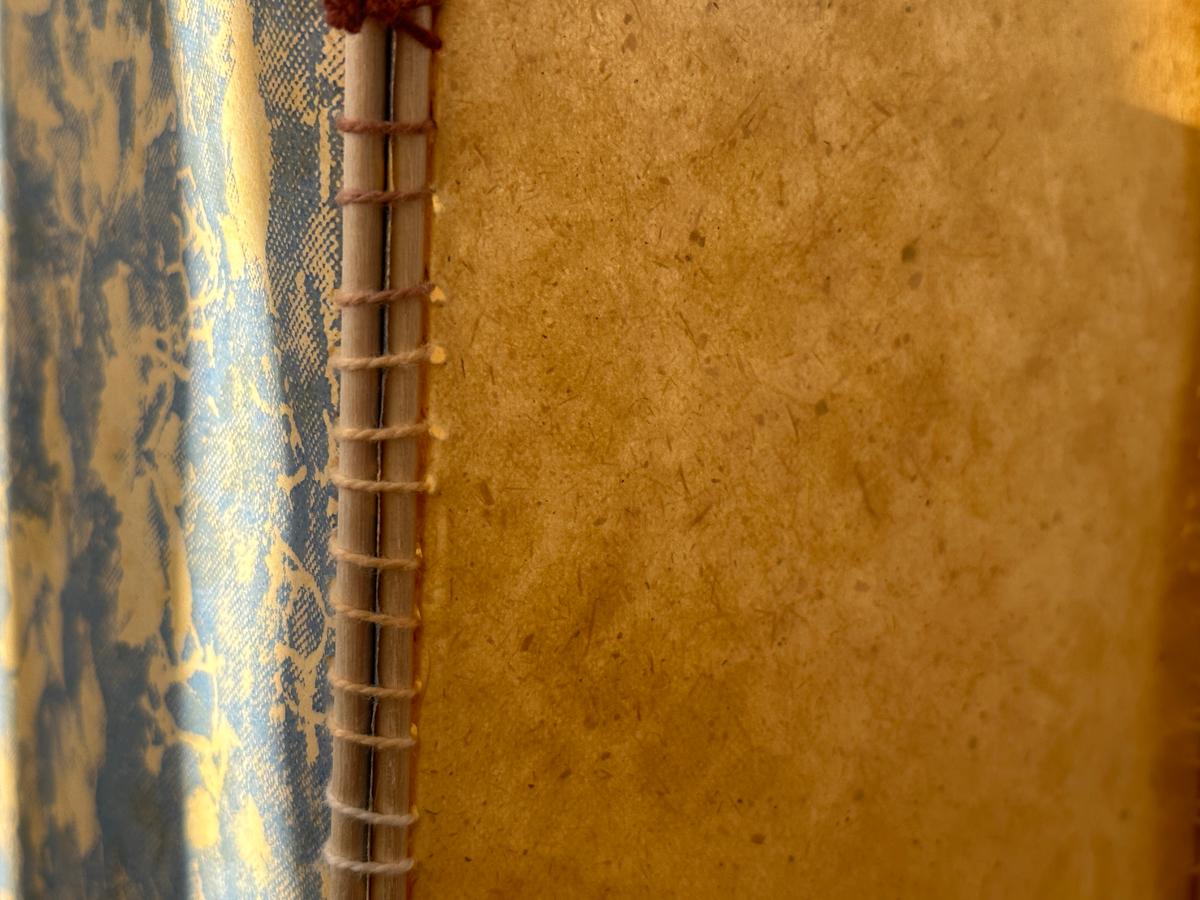
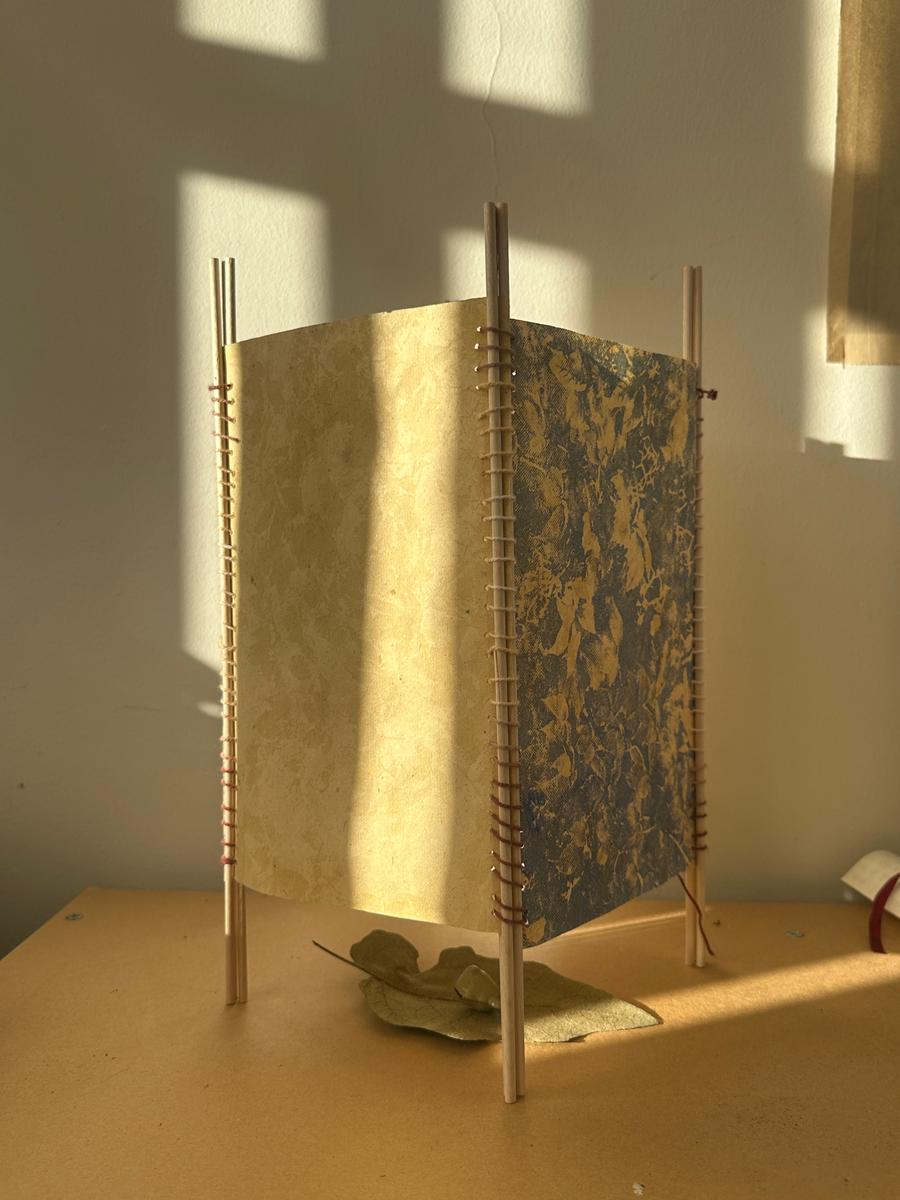
made a lamp with the goldenrod paper + Blue screen-printed by Sanchari using natural pigment based ink
22 January 2026
made a lamp with the goldenrod paper + Blue screen-printed by Sanchari using natural pigment based ink
papermaking with plant fibres and paper
Made two batches this time; the first one with thicker paper pulp mixed with phragmites and the other, boiled with golden rod to give it a "golden" color.
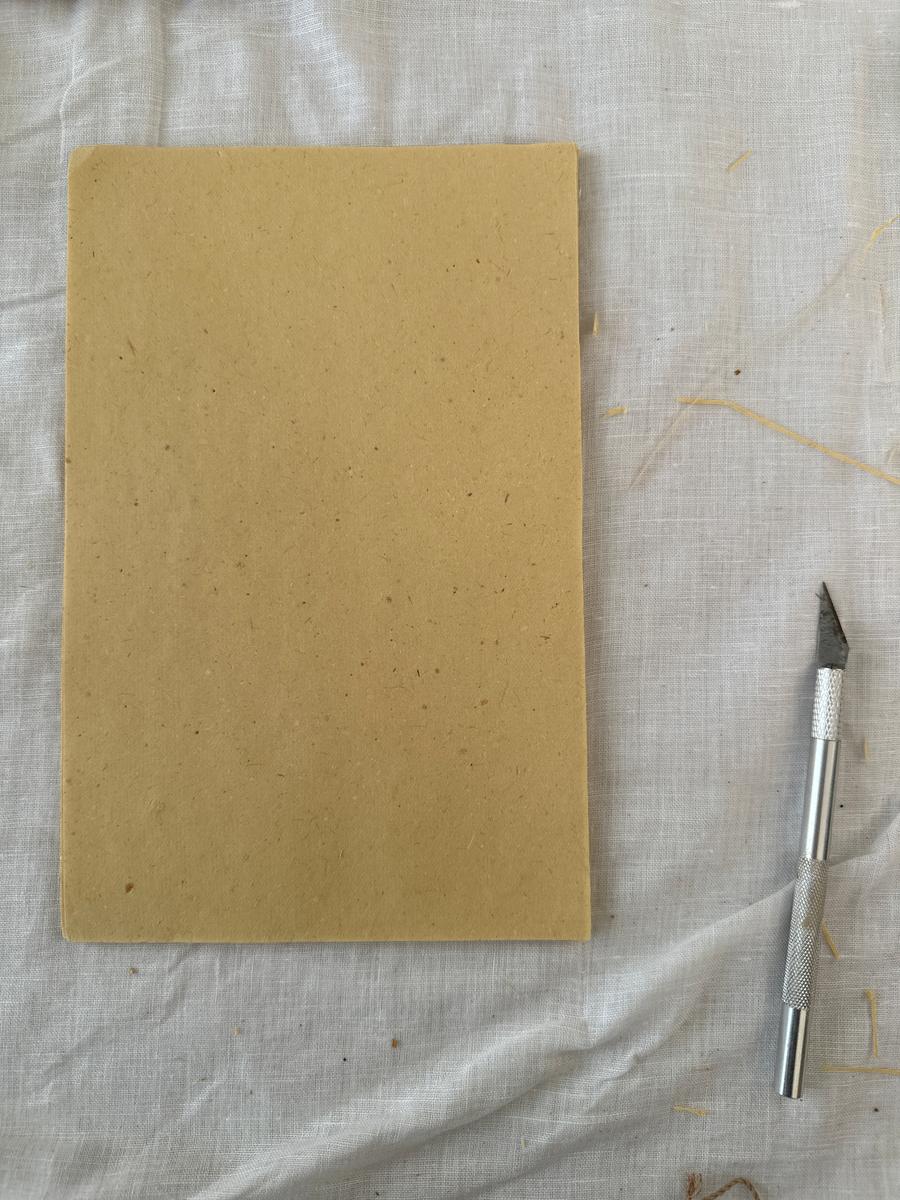
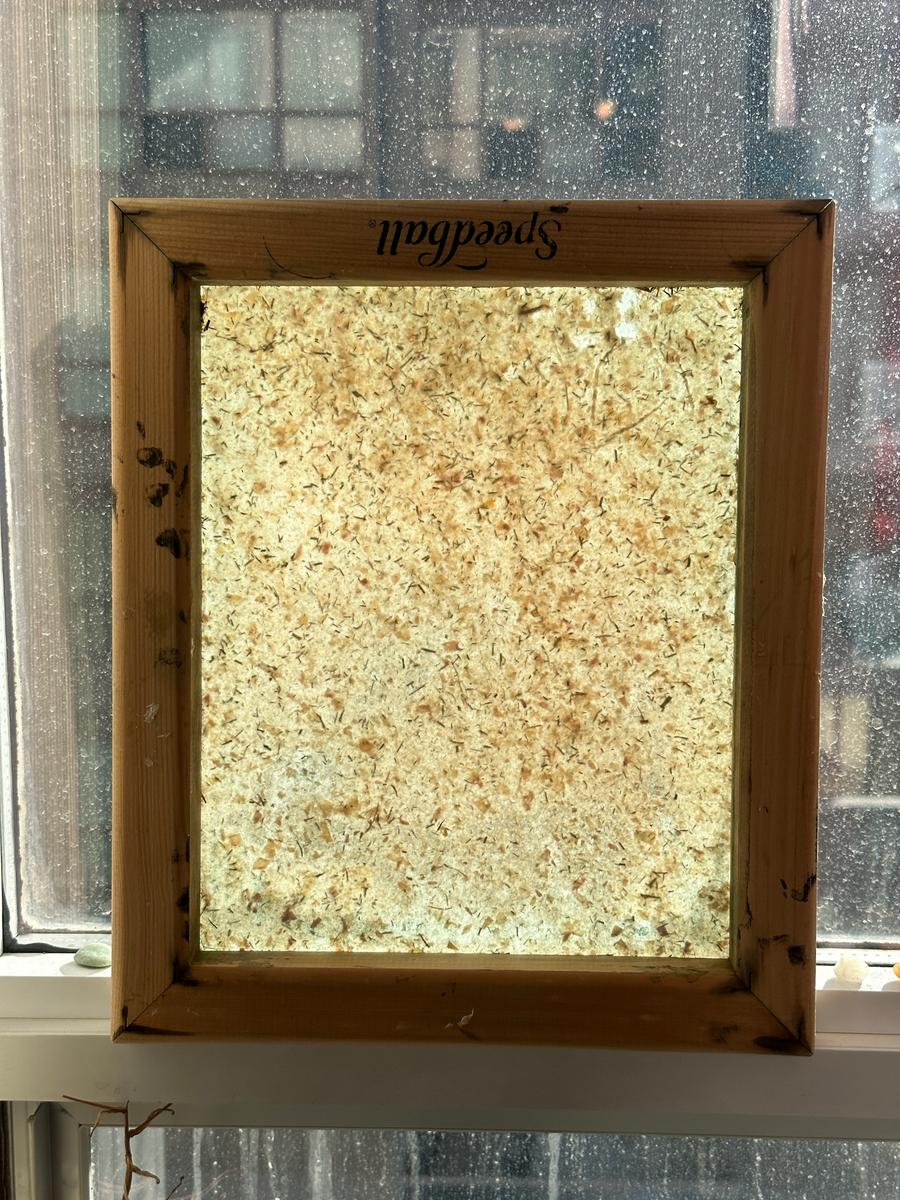
Quick ecology lesson: Phragmites australis, Phragmites, pronounced “frag-my-tees” is a wetland grass native to Eurasia,sources conclude that it was probably introduced accidentally to North America in ballast material sometime during the late 1700s or early 1800s, and since then, it has completely taken over the Canadian wetlands, destroying habitats, and rapidly decreasing biodiversity. Today, phragmites is listed as one of the "worst" (hardest to control) invasive plants in the nation. There are incredible people working very hard on the "front lines" all over Ontario helping to control the eager grass so that the native plants and animals who once thrived in wetland spaces do so yet again.
I've been thinking about invasive plants and how we can re-situate our behavior, language and ontology towards them. In stewarding circles, when the "names" of invasive plants are brought up, they are often "booed" or looked upon with disdain; likely because our work essentially involves exterminating them from environments in which we believe they never belonged in the first place.
See morepapermaking- first try
Cut up phrag leaves into 1" pieces. Soaked them in water for a week (give or take)
Boiled phrag in water with two and a half tablespoons of washing soda (soda added while phrag was already in water)
Boiled for an hour until phrag was dark in colour and slightly limp. I stopped at about an hour mark because I was scared to over-boil.
Rinsed the phrag until water ran as clear as it could
Blended prag with some tap water in blender to form pulp
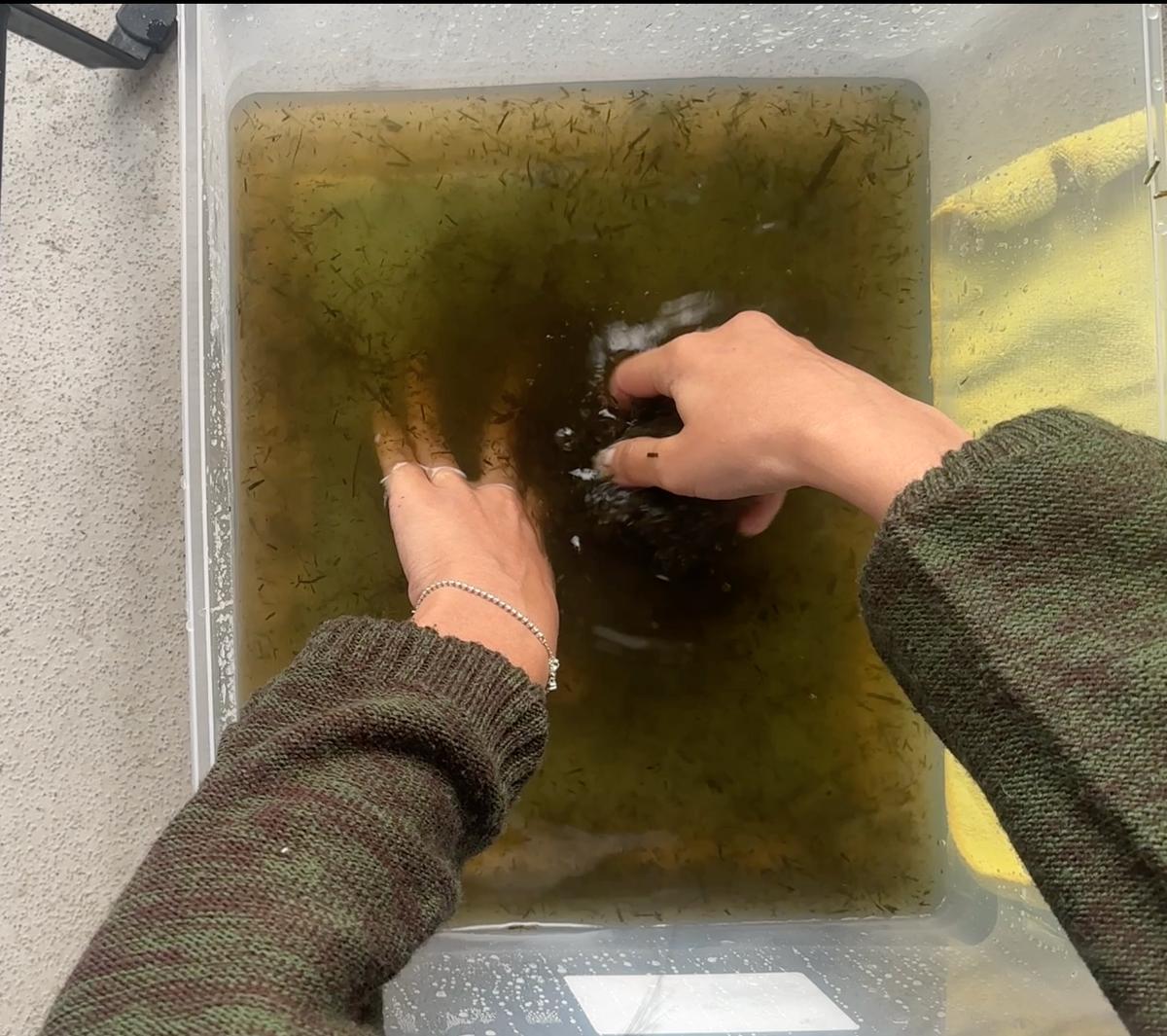
Distributed phrag pulp into tub of water
Used screen to "paper-make" - shallow side kept forcing itself up so it didn't work. deep side worked, but caused paper to stick to the screen- even after drying, it came out in pieces
plant paper making
shallow side forcing itself upwards
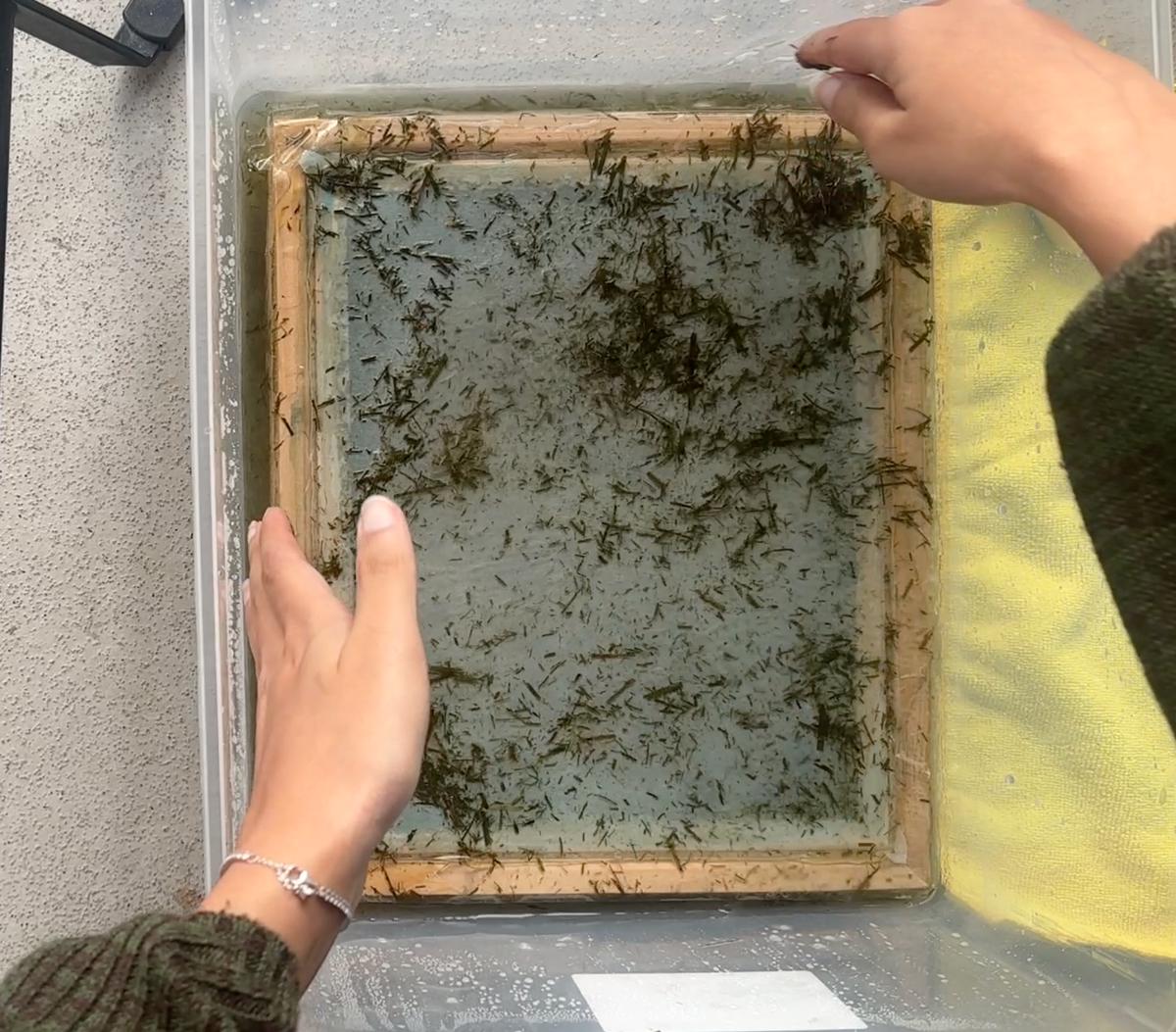
deep side of screen cooperating
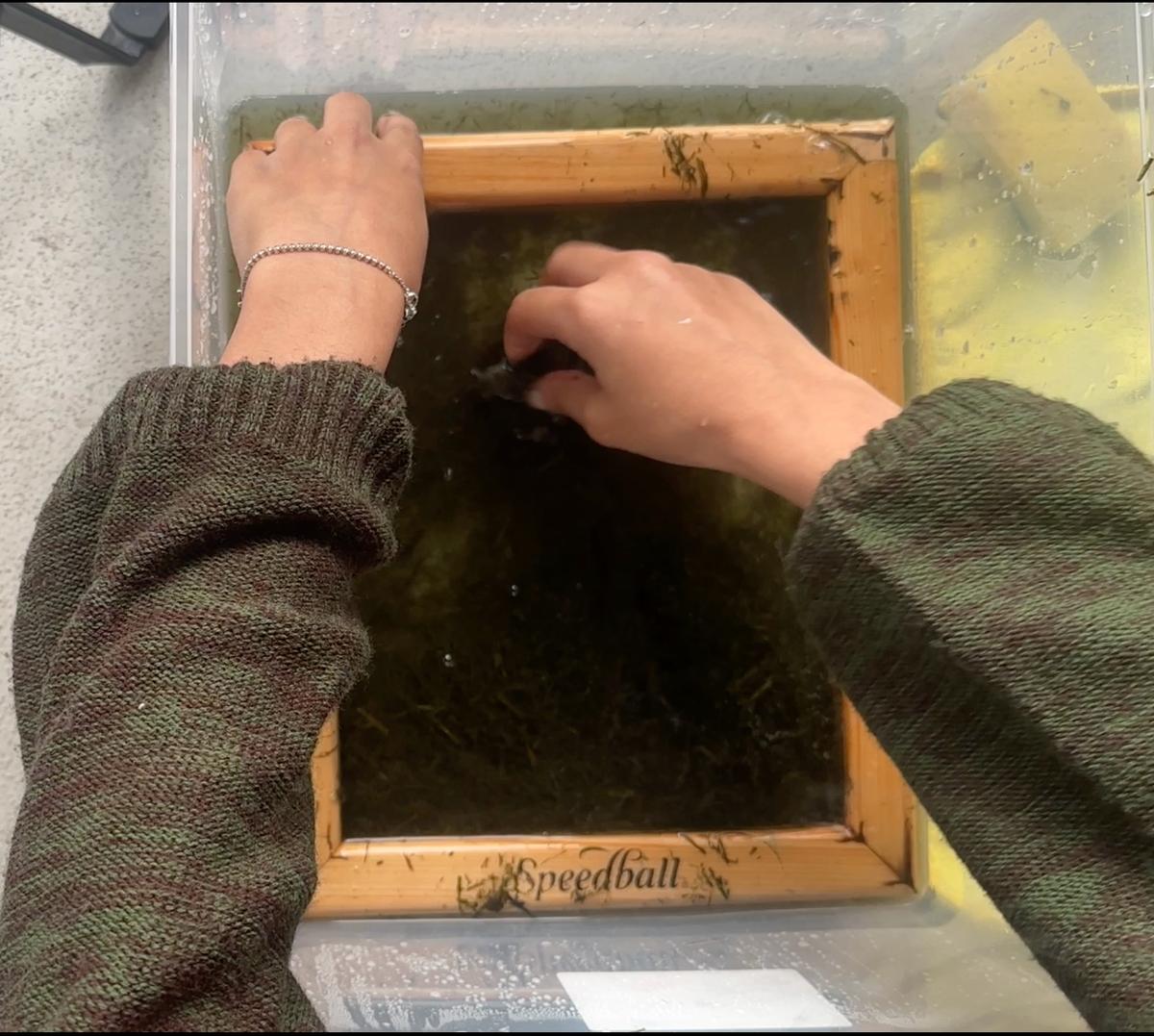
using the deep side, the pulp is easy to maneuver on the screen because it sinks instead of pushing afloat
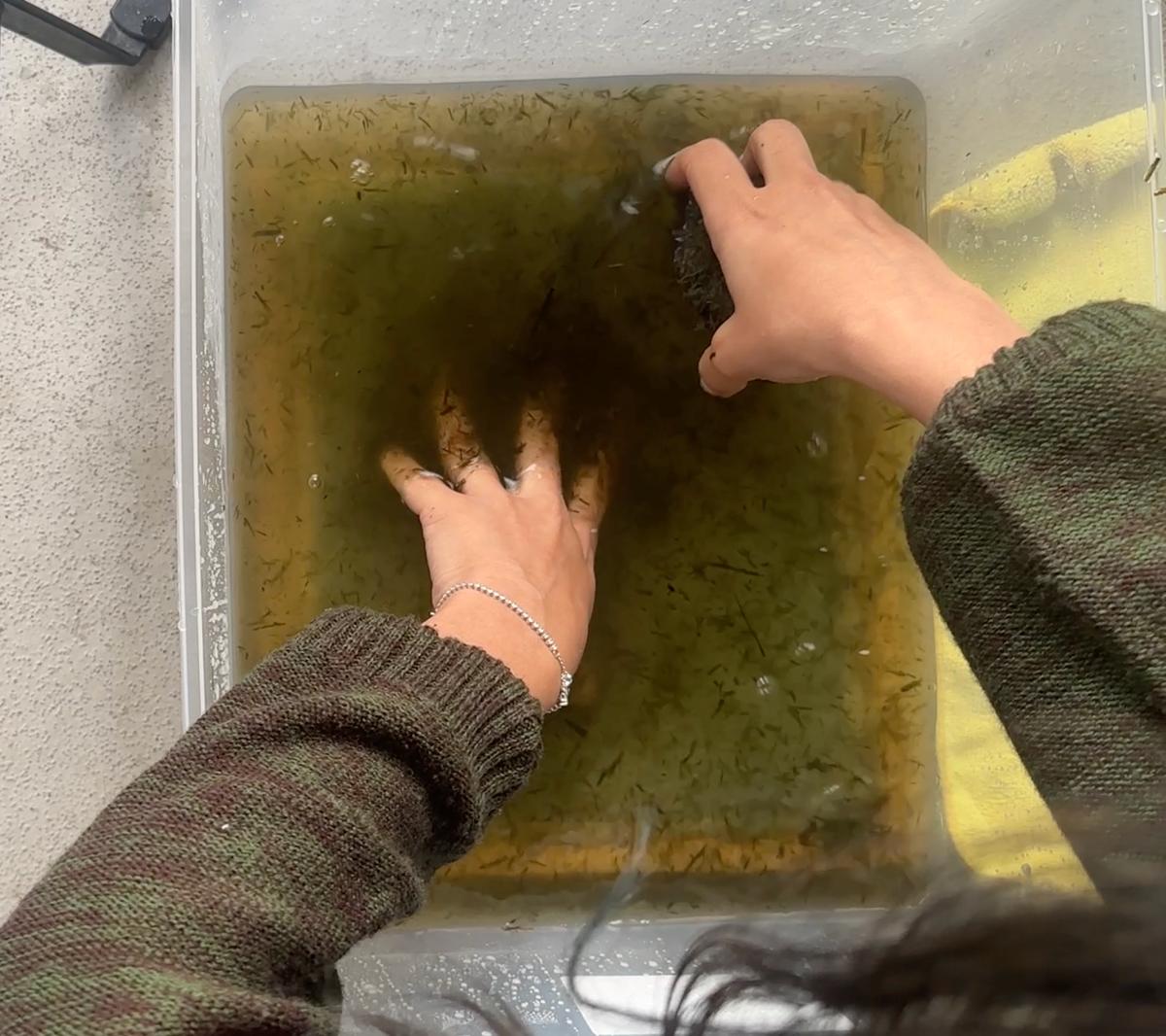
trying to see if adding pulp from the top will help evenly distribute it