Printed Traces (of Scent and Wreckage) Rose Nordin workshop
A beautiful synchronicity befell me this January when I found out Rose Nordin was going to be facilitating a workshop at OCAD. I had been admiring her work just a month prior when I found out she was the designer at Spiral House .(1)
The workshop centered around olfactory memory as a trigger for language, gesture, and graphic form as opposed to the visual, which through images outputted from Pinterest, are.na, Instagram etc. is what designers often default to, for ideation/inspiration. These tools are arguably useful in their own right(2), but (for image) when we rely on a secondary source, the work becomes less imbued by ones own experiences.
Hence, because the experience of SMELL is removed from the virtual (or GUI?) experience, relying on our own "secondary research"(3) of olfactory memory and ones own lived experiences in relation to it, can be a good place to start.
So really, the question here was how we can work towards a truly embodied (through the nose) and reflexive (through memory and recall) design process.
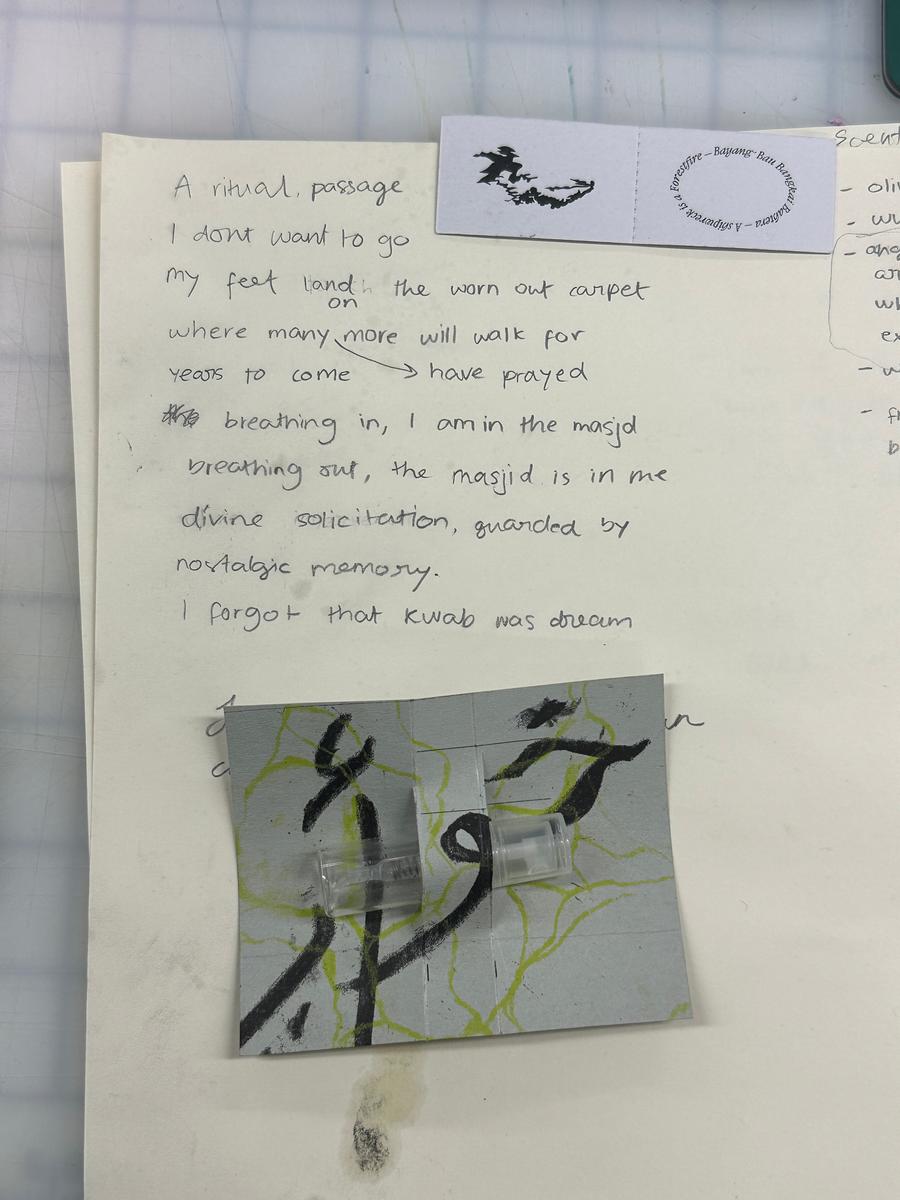
During the workshop, Rose recited a tale about a shipwreck aboard the Dutch East Indian Company. This ship was carrying hundreds upon hundreds of Botanical specimens en route back to Europe from colonized Indonesia. For her upcoming exhibition, Rose had worked with a perfumer to create a scent of what that shipwreck might have smelled like. Burnt sour oak, banana peel and tiger hair were some of the notes listed and recalled by friends when they whiffed it.
Our task was then to smell and write— Whatever came up in our minds, wherever it took us, we were asked to try and put it into language; poetic or otherwise.
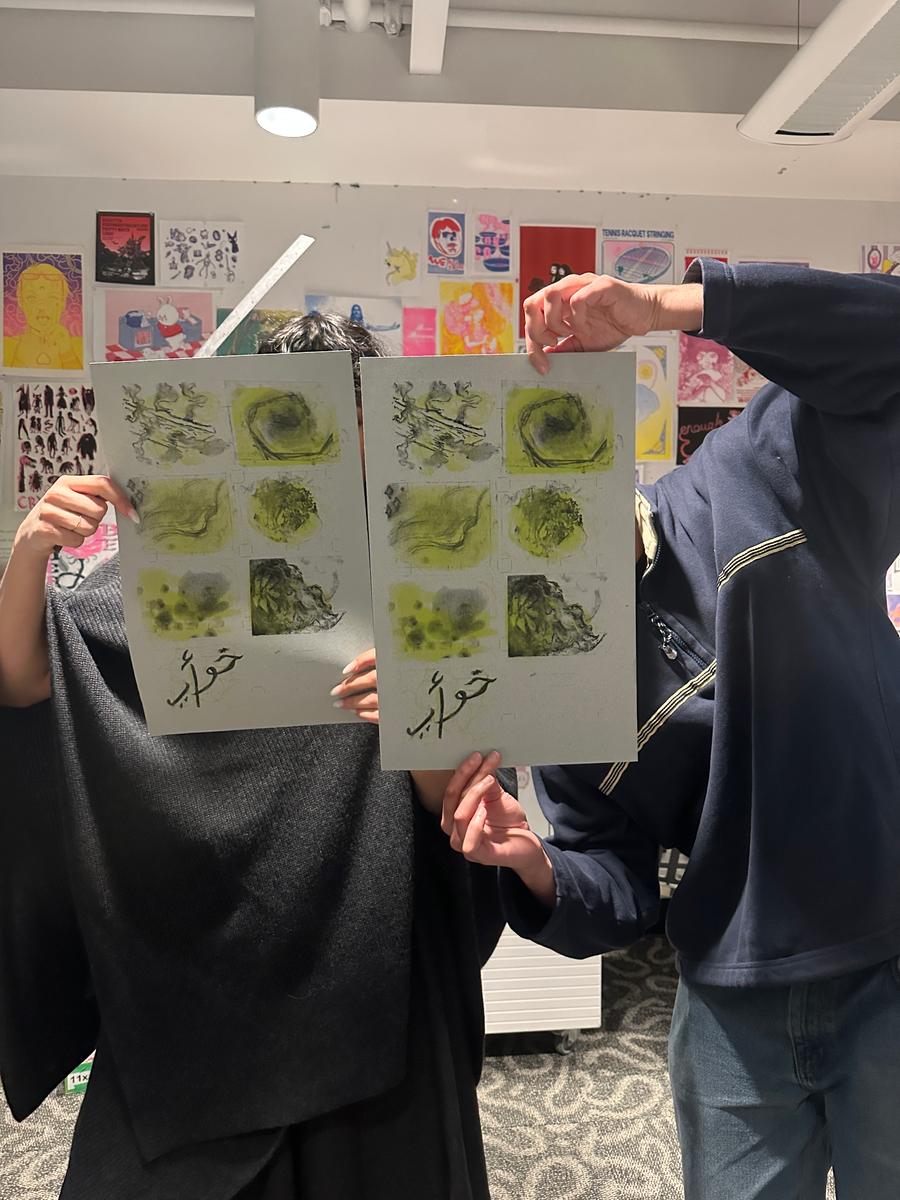
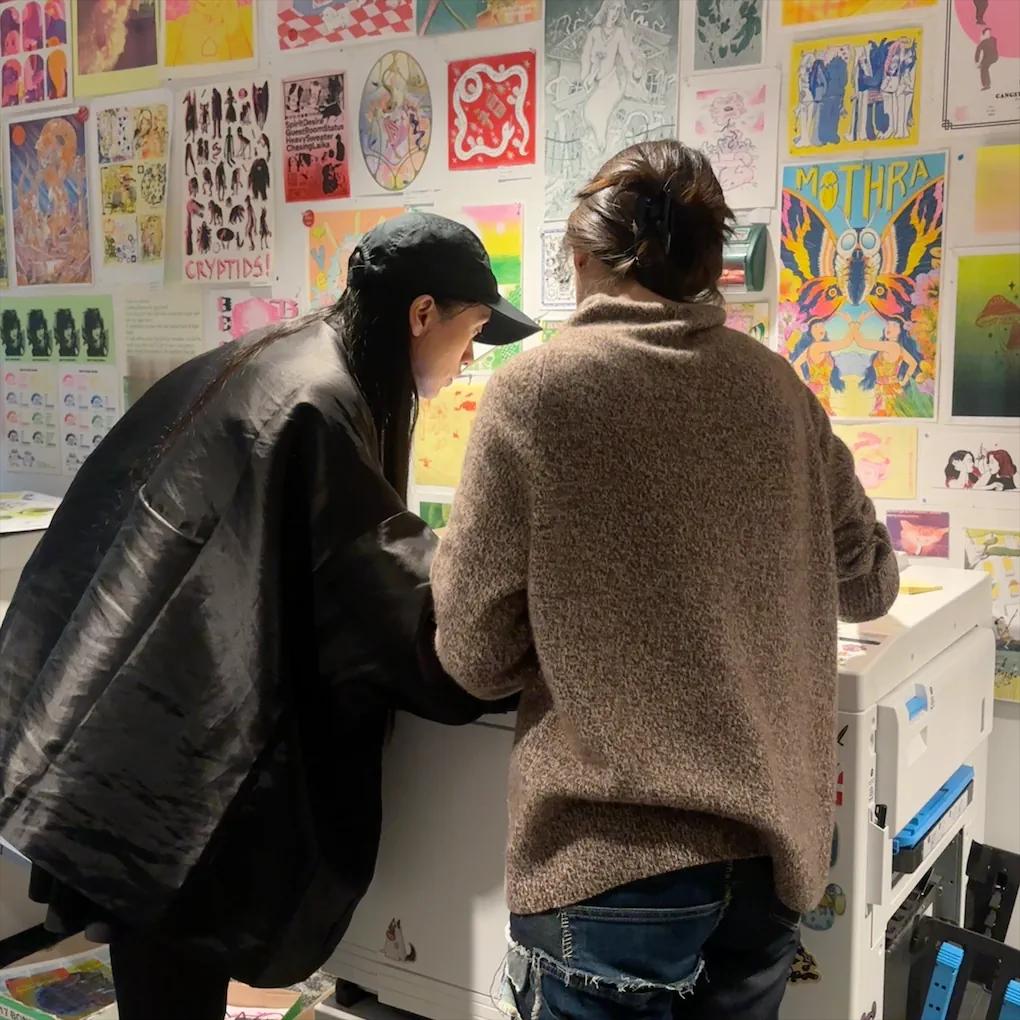
Next, we used charcoal to sketch the experience of the scent—whatever gestures or graphic forms emerged. We then chose two of the ones that we most resonated with and used the risograph to layer them, one on top of the other, merging the two forms. The result, were these beautiful (mainly) abstractions that were guided by nothing but olfactory memory and a very chalky, unpredictable medium (charcoal)
Design education and industry have ingrained in us a need to visually conform to what already exists in the space of what we are doing. One could argue that this isn't really a dire issue; everything looks the same because it does not harm, it does not offend, it does the job of communication.(4) The reality of being a designer in the wider economy is that the industry does not want "art" (embodied, reflexive praxis) it wants conformity (trendy, attention stealing, safe)
Then, this becomes more than a sensorial undertaking. Designers have a latent desire to imbue in our process, more than the visual, more than the converging paths designed by job markets of trendy logos and personal brandings.
This is why student work is so interesting, this is why personal projects are exciting, this is why so many designers call themselves artists. If I never meet the privilege of being able to do this as a career, at least I have an alternative practice.
-
As a recent grad, I was drawn to what it must take to find such interesting opportunities for design that won't erode my soul.
-
In the case of Instagram and Pinterest, it's a slippery slope depending on how "useful" one perceives aesthetically homogenizing algorithms to be. Is it good that my work looks exactly like the work Instagram is suggesting to me? Maybe, maybe not.
-
There is something interesting to be said about ones own memory being "secondary research" as opposed to primary because it does not does not conclusively yield either qualitative or quantitative "data" because of it's bias. The same reason police lineups don't hold up in court as conclusive evidence. memory,, an unreliable narrator...
-
I Am An Enemy Of The Smooth Working In The Society Of The Smooth